
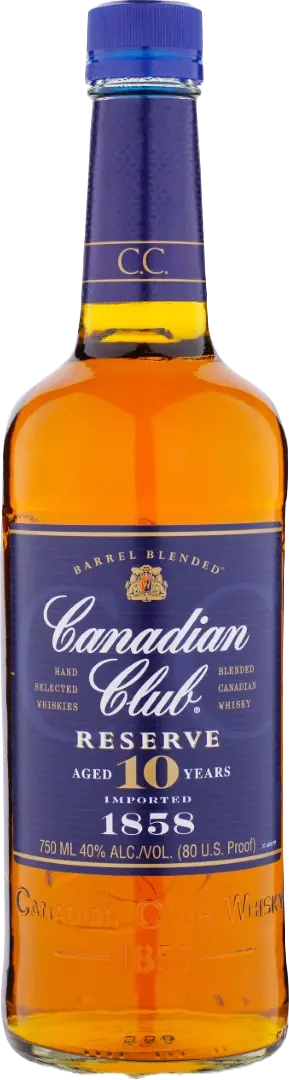
malty woody
€18Canada, Blended

Flavours

Whisky character

Fresh
Warm
Mild
Full
Smooth
Spicy

Taste mentions

Facts

Hiram Walker built his distillery on the Detroit River in 1858. He set it in Windsor, Ontario, and named his blend simply Club. American rivals hated how well it sold. They pushed Washington to force country-of-origin labels on foreign spirits. The plan backfired: Club Whisky became Canadian Club, and the name stuck for good. During Prohibition, smugglers ran it across the river by the crate. It became one of the most sought-after bottles in America. This blend carries that legacy forward, rounded and mellow, best enjoyed neat rather than mixed into anything else.

Compare prices

No shops found to compare.

Good alternatives

Reviews

Be the first to add a review

About the distillery

Distillery

Canadian Club

In 1858, grain merchant Hiram Walker crossed the Detroit River into Canada. He built his distillery in Walkerville, Ontario, drawn by the quality of the local grain. He stamped his own name on every barrel, an unusual mark of accountability at the time. By 1893 the whisky carried a new name, Canadian Club, and it stuck. When the United States banned alcohol in 1920, Canada kept distilling and exporting it legally. Canadian Club became the most smuggled whisky crossing the Detroit River into the country, a favorite of bootleggers supplying secret bars. That reputation as Prohibition's whisky of choice only added to its fame. Today Canadian Club belongs to Suntory Global Spirits, decades after Walker's death in 1899. Walkerville, the town he built for his distillery workers, later became part of Windsor, Ontario. The whisky is still made close to where Walker first set up shop on the riverbank.
4.1Average rating

7Whiskies on Distilld

Flag of CanadaCanada

Most popular whiskies from Canadian Club

About the Canadian Club 10 years Reserve

Canadian Club 10 years Reserve is a blended Canadian whisky from Windsor, Ontario, Canada, matured for a decade before bottling. Canadian Club has built its reputation since the 1850s on a mellow, approachable style rather than raw intensity. At 40% ABV, this expression leans into caramel and corn sweetness, with light nutmeg and cinnamon spice running underneath. Oak sits in the background rather than dominating, a mark of the gentler Canadian approach to blending. It is a whisky built for regular pouring rather than occasional ceremony. The story starts in 1858, when Hiram Walker built a distillery on the Detroit River in Windsor, Ontario. He called his whisky Club. It grew so popular that American rivals pushed Washington to require country-of-origin labels on foreign spirits. The plan backfired. Club Whisky became Canadian Club, and the new name only helped sales. Walker also built the surrounding town of Walkerville to house his workers. It became a rare model of industrial planning for its era. That same site still produces Canadian Club today. Canadian Club found its biggest audience during American Prohibition, when demand for legal whisky vanished overnight. Smugglers ran cases across the Detroit River by night. Canadian Club became one of the most requested names among bootleg buyers. That reputation for consistency followed the brand for decades afterward. In the glass, this Canadian Club 10 years Reserve shows caramel, corn, and a trace of dark chocolate. The finish is dry and oaky. Ten years in barrel rounds off the edges without erasing the grain character underneath. Canadian Club 10 years Reserve drinks best neat, in a simple glass, with time to open up. A light swirl lifts grain and butterscotch notes alongside the caramel and cinnamon already present. This is a whisky for a quiet pour at the end of the day, not a showpiece for a crowd. Ten years in Canadian oak gives it just enough depth without covering the light, malty base. You can know Canadian Club from its history, or you might be trying it for the first time. Either way, this Reserve offers an honest, easygoing introduction to Canadian blended whisky.