malty fruity
2.9
(6)
€20Scotland, Blended

Flavours

Whisky character

Fresh
Warm
Mild
Full
Smooth
Spicy

Taste mentions

Facts

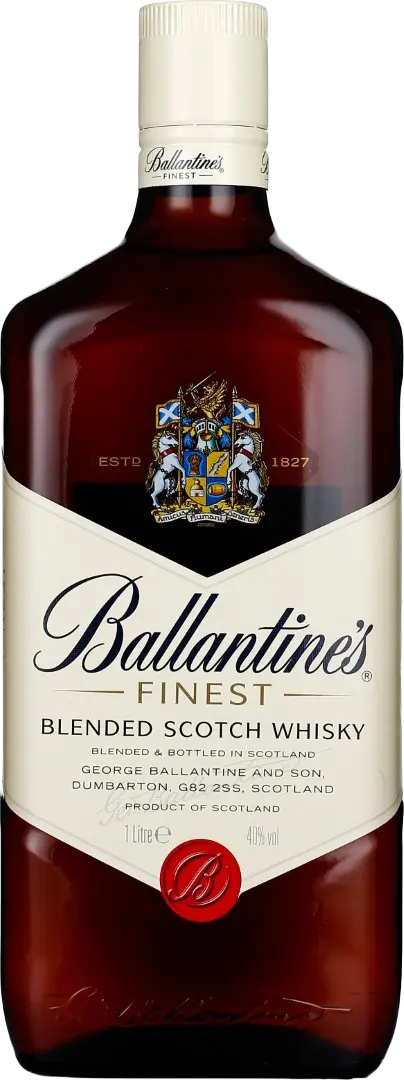
Fifty single malts and four grain whiskies go into every bottle of this blend. Miltonduff and Glenburgie carry most of the weight. The recipe dates to 1910. The firm behind it goes back to 1827 and an Edinburgh grocer named George Ballantine. The whisky is soft and sweet up front, honey over a warm bread note. A dry, faintly medicinal edge keeps it from turning sugary. Nothing about it is difficult. That is the point. It is the kind of blend that made Scotch a drink people pour without ceremony.

Compare prices

Compare prices by shop
ShopType Price
Gall & Gall
Gall & Gall
€39.99
€19.99
Drankdozijn
Drankdozijn
€24.95

Good alternatives

Reviews

2.9 /5

6 reviews

1 star
2 star
3 star
4 star
5 star

What do you think?

About the distillery

Distillery

Ballantine's

It began in Scotland in 1827. A farmer's son named George Ballantine opened a small grocery shop in Edinburgh and started supplying whisky to his customers. That side business grew into one of the best-known blended Scotch whisky names in the world, and the brand still carries his name today. Ballantines is a blend rather than a single malt. The recipe draws on around 50 single malts and four single grain whiskies from across Scotland. Two Speyside distilleries, Miltonduff and Glenburgie, sit at the heart of it and give the blend its smooth, gentle backbone. The quality earned royal approval early on. In 1895 the firm received a Royal Warrant from Queen Victoria, a rare endorsement for a whisky house. Now owned by Chivas Brothers, part of Pernod Ricard, Ballantines remains one of the biggest-selling Scotch whiskies on the planet.
3.5Average rating

47Whiskies on Distilld

Flag of ScotlandScotland

Most popular whiskies from Ballantine's

About the Ballantine's Finest

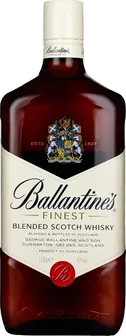
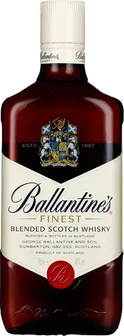
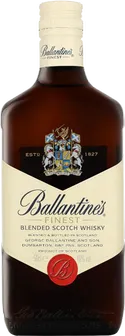
Ballantines Finest is a blended Scotch whisky from Scotland, bottled at 40% ABV. Around 50 single malts and four grain whiskies go into every batch, drawn from distilleries all over the country. The blend launched in 1910. It has led the range for more than a century. That is a large cast for a blend. Most rely on a handful of malts rather than dozens of them. George Ballantine started out in 1827 as a grocer in Edinburgh. He moved into wine and spirits, then began blending under his own name. Queen Victoria granted the firm a Royal Warrant in 1895. The family name has stayed on the label ever since. Two malt distilleries, Miltonduff and Glenburgie, still form the backbone of the blend. Pernod Ricard has owned the brand since 2005 and keeps it within Chivas Brothers. The first impression is sweet, with honey sitting on top. Underneath runs a malty, cereal note, like fresh bread pulled from the oven. Those same flavours carry into the mouth. Bread and grain lead, then the honey returns and rounds things off. The finish turns drier and a little medicinal, with a faint brine edge, like sea air. It is a soft dram that still leaves something behind. Where the aged expressions add toffee and spice, Ballantines Finest keeps things young and bright. It carries no age statement, so the blenders chase consistency rather than a number. Their job is to erase the differences between casks. The same 50 malts sit behind every bottle, year after year. That is the point of a house blend. You are buying a recipe, not a single cask or a single harvest.